FOODS
FOODS
 Indian cuisine encompasses a wide variety of regional and traditional cuisines native to India. Given the range of diversity in soil type, climate, culture, ethnic groups, and occupations, these cuisines vary significantly from each other and use locally available spices, herbs, vegetables, and fruits. Indian food is also heavily influenced by religious and cultural choices and traditions. Also, Middle Eastern and Central Asian influences have occurred on North Indian cuisine from the years of Mughal rule. Indian cuisine is still evolving, as a result of the nation's cultural interactions with other societies
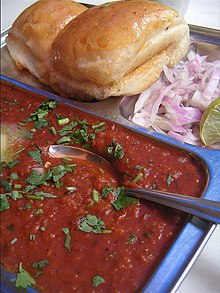 Maharashtrian cuisine is an extensive balance of many different tastes. It includes a range of dishes from mild to very spicy tastes. Bajri, wheat, rice, jowar, vegetables, lentils, and fruit form important components of the Maharashtrian diet. Popular dishes include puran poli, ukdiche modak, batata wada, sabudana khichdi, masala bhat, pav bhaji, and wada pav.[ Poha or flattened rice is also usually eaten at breakfast. Kanda poha and aloo poha are some of the dishes cooked for breakfast and snacking in evenings. Popular spicy meat dishes include those that originated in the Kolhapur region. These are the Kolhapuri Sukka mutton, pandhra rassa, and tabmda rassa. Shrikhand, a sweet dish made from strained yogurt, is a main dessert of Maharashtrian cuisine. The cuisine of Maharashtra can be divided into two major sections—the coastal and the interior. The Konkan, on the coast of the Arabian Sea, has its own type of cuisine, a homogeneous combination of Malvani, Goud Saraswat Brahmin, and Goan cuisines. In the interior of Maharashtra, the Vidarbha and Marathwada areas have their own distinct cuisines. The cuisine of Vidarbha uses groundnuts, poppy seeds, jaggery, wheat, jowar, and bajra extensively. A typical meal consists of rice, roti, poli, or bhakar, along with varan and aamtee—lentils and spiced vegetables. Cooking is common with different types of oil. Savji food from Vidarbha is well known all over Maharashtra. Savji dishes are very spicy and oily. Savji mutton curries are very famous. Like other coastal states, an enormous variety of vegetables, fish, and coconuts exists, where they are common ingredients. Peanuts and cashews are often served with vegetables. Grated coconuts are used to flavour many types of dishes, but coconut oil is not widely used; peanut oil is preferred. Kokum, most commonly served chilled, in an appetiser-digestive called sol kadhi, is prevalent. During summer, Maharashtrians consume panha, a drink made from raw mango.
Comments
Post a Comment